

Reviews - 51 #2, Honor and Curse #2, and Exploit #2
From Mad Cave Studios

I read a trio of second issues from Mad Cave Studios this week. Here are some of my thoughts on 51 #2, Honor and Curse #2, and Exploit #2.
51 #2
The team investigates missing teens in a quiet Northwest town where UFO sightings are the least of their problems. An old alien friend resurfaces, forcing Gord to confront the past he’s been trying to drink away
What should have been a simple job spirals into mind control, moral compromises and wildly irresponsible use of alien weaponry.
Author: Curt Pires
Artist: JOK
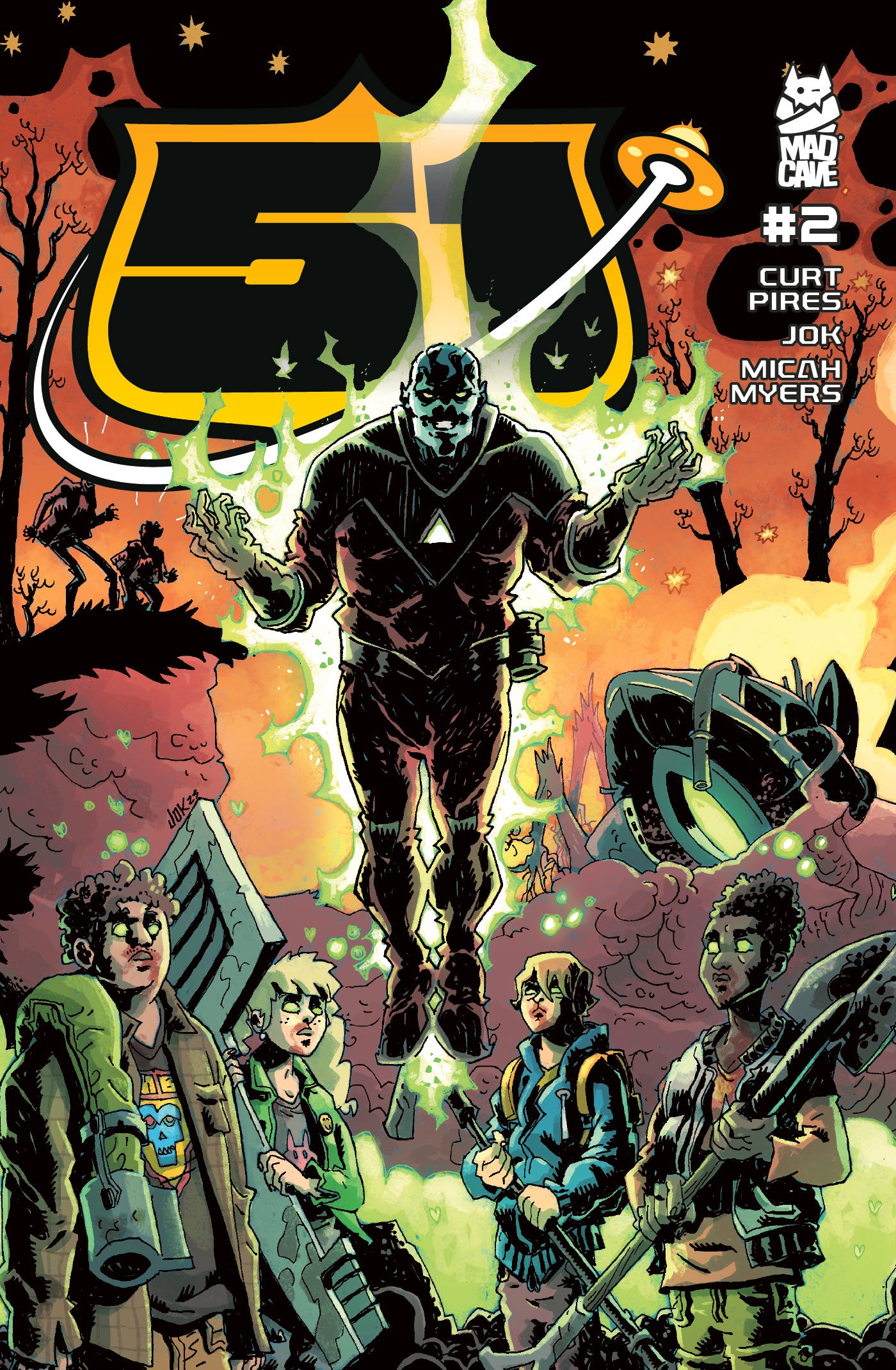
51 #2 from Mad Cave Studios keeps piling on the madness in the best possible way, expanding the strange world introduced in the first issue while leaning even harder into the mix of sci-fi mystery and offbeat humour. The biggest reveal this time around is the origin of the alien living on Earth, and it adds another layer to an already chaotic story that feels like it could spiral completely out of control at any moment. Despite all the insanity, the series still manages to stay engaging because there’s clearly a bigger mystery unfolding underneath the humour and violence.
What really stands out is how naturally the comedy fits into the story. Small throwaway moments — from jokes about killing interns to the hilarious naming of the oversized weaponry — give the issue a playful tone that stops it from becoming too heavy. The humour never feels forced either; instead, it works as part of the world-building and helps define the personalities of the cast. Even during tense scenes, there’s usually some ridiculous detail or line that reminds you this book doesn’t take itself too seriously.
Gord’s storyline is especially well handled here. His backstory and involvement are woven cleverly into the central investigation, making his role feel important rather than just a side diversion. The writing does a good job of balancing character development with the larger mystery, and there are moments where the emotional and more grounded aspects begin to come through. That said, every time the story starts to settle into something more serious, it gets smashed apart by another bizarre reveal, outrageous action beat, or strange sci-fi concept. That contrast between grounded character moments and complete absurdity is a huge part of the book’s charm.
Visually, the issue continues to impress. The artwork captures the grim atmosphere of the small-town setting while still making room for the more outrageous alien elements and over-the-top technology. The darker colour palette gives the town a worn, uneasy feeling, which contrasts nicely with the brighter and more chaotic sci-fi visuals. The colouring in particular helps sell both sides of the story, blending shadowy environments with flashes of strange alien energy and bizarre machinery. Altogether, the visuals reinforce the tone perfectly, helping the horror, comedy, and science-fiction elements all coexist without clashing.
Get it at Forbidden Planet:
Honor and Curse: Eternal #2
Our second chapter raises the stakes as Genshi’s war turns darker and more personal.
A brutal rescue mission pits him against overwhelming odds and an unstoppable enhanced soldier, forcing Genshi to confront the power he’s been trying to keep buried.
As the line between man and myth blurs, one truth becomes clear: once the Tengu is unleashed, there may be no turning back.
Author: Mark London
Artists: Nick Marinkovich, and Jaime Infante
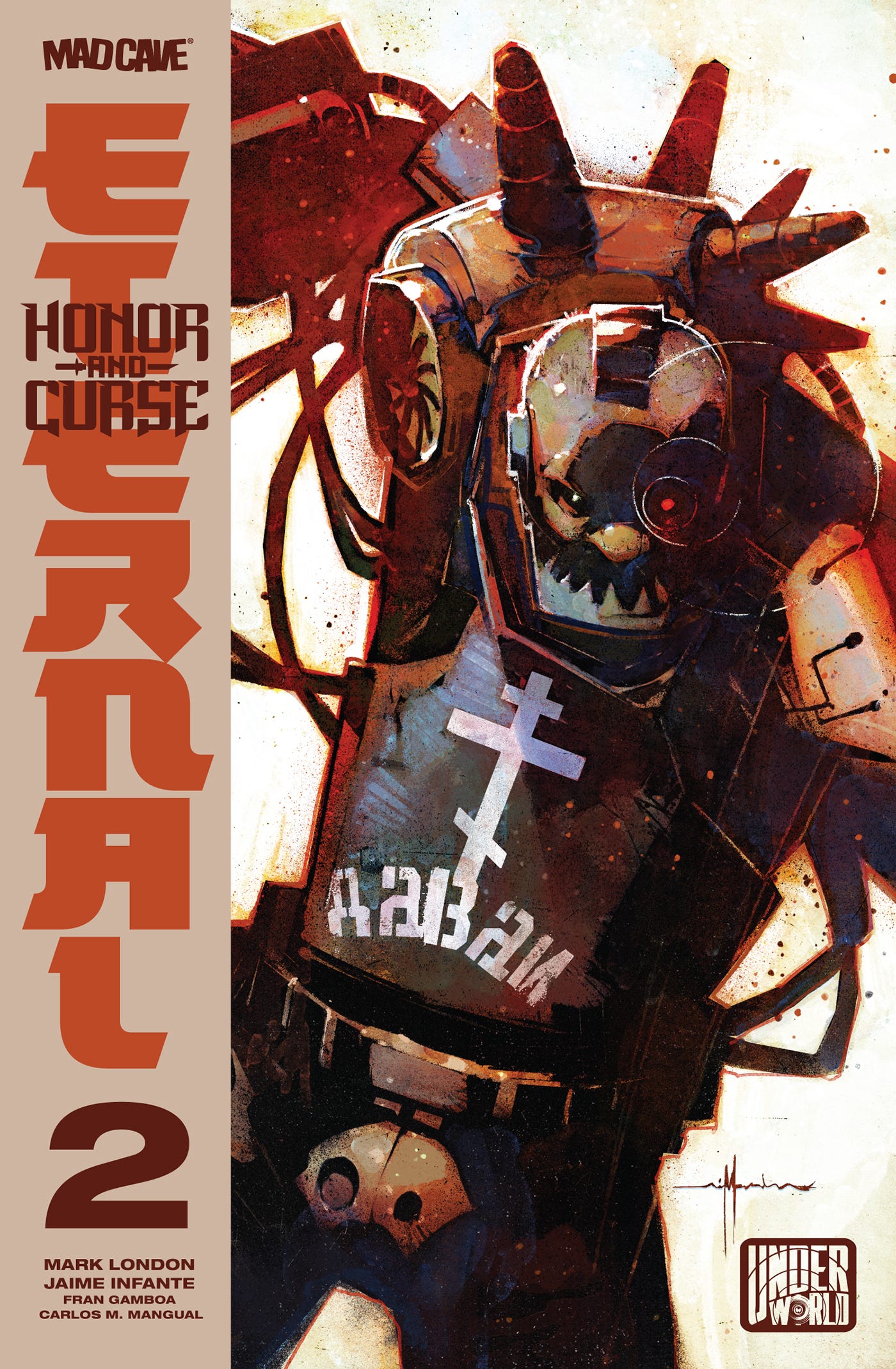
Honor and Curse: Eternal #2 from Mad Cave Studios takes everything established in the first issue and pushes it several steps further, delivering a much more intense and action-heavy chapter while continuing to build the larger mystery in the background. The pacing feels faster this time, with tension constantly rising as the violence escalates and the true dangers surrounding Genshi become clearer.
The action sequences are easily one of the strongest parts of the issue. Genshi is incredibly effective against ordinary soldiers, and the book does a great job of showing just how skilled and dangerous he is without resorting to excessive dialogue or exposition. His movements feel precise and calculated, making every fight sequence engaging to follow. There’s a confidence to the way he handles standard enemies that makes him feel almost unstoppable at first.
That changes quickly once the augmented super soldier enters the picture. The threat level jumps immediately, and the fights become far more brutal and desperate. This is where the issue really shines because it forces Genshi into a position where skill alone may not be enough. The story digs deeper into the power he carries within himself and the emotional and physical cost of unleashing it. There’s a real sense that every time he taps into that darker side, he risks losing a piece of himself in the process.
What makes that struggle interesting is that Genshi’s reluctance to fully embrace his power feels completely understandable. His hesitation doesn’t come across as weakness but as someone trying to hold onto control and morality despite the circumstances around him. His intentions may genuinely be noble, but the issue strongly suggests that trying to suppress or contain that darkness could backfire on him. The idea that good intentions can still lead someone down a destructive path hangs heavily over the story, giving the character conflict more weight beyond the action itself.
At the same time, the book continues teasing the larger force operating behind the scenes. There’s a growing sense that someone is manipulating events from the shadows, and the mystery surrounding that figure or organisation becomes even more intriguing here. While this issue focuses heavily on combat and survival, it also feels like it’s laying the groundwork for a much bigger confrontation later in the series.
The artwork complements the tone perfectly. The violence is raw, bloody, and unforgiving, but it never feels excessive for the sake of shock alone. Instead, the visuals reinforce how dangerous and painful these encounters really are. The colouring choices stand out as well, using contrast and lighting to heighten the atmosphere during both the quieter moments and the explosive action scenes. Some of the panel layouts and camera angles are especially effective during combat, helping the fights feel dynamic and impactful without becoming confusing to follow. Altogether, the visuals and storytelling work together to create an issue that feels intense, brutal, and emotionally charged from beginning to end.
Get it at Forbidden Planet:
Exploit #2
On the night RIOT prepares to publish its most dangerous story yet, celebration curdles into dread as unseen forces begin to move.
A public reckoning, a viral backlash and a sudden eruption of chaos leave Kirby marked and exposed in ways she never expected.
As fear closes in from every direction, escape becomes both urgent and impossible.
Authors: Tim Leong, and Laura Hudson
Artist: Emiliana Pinna
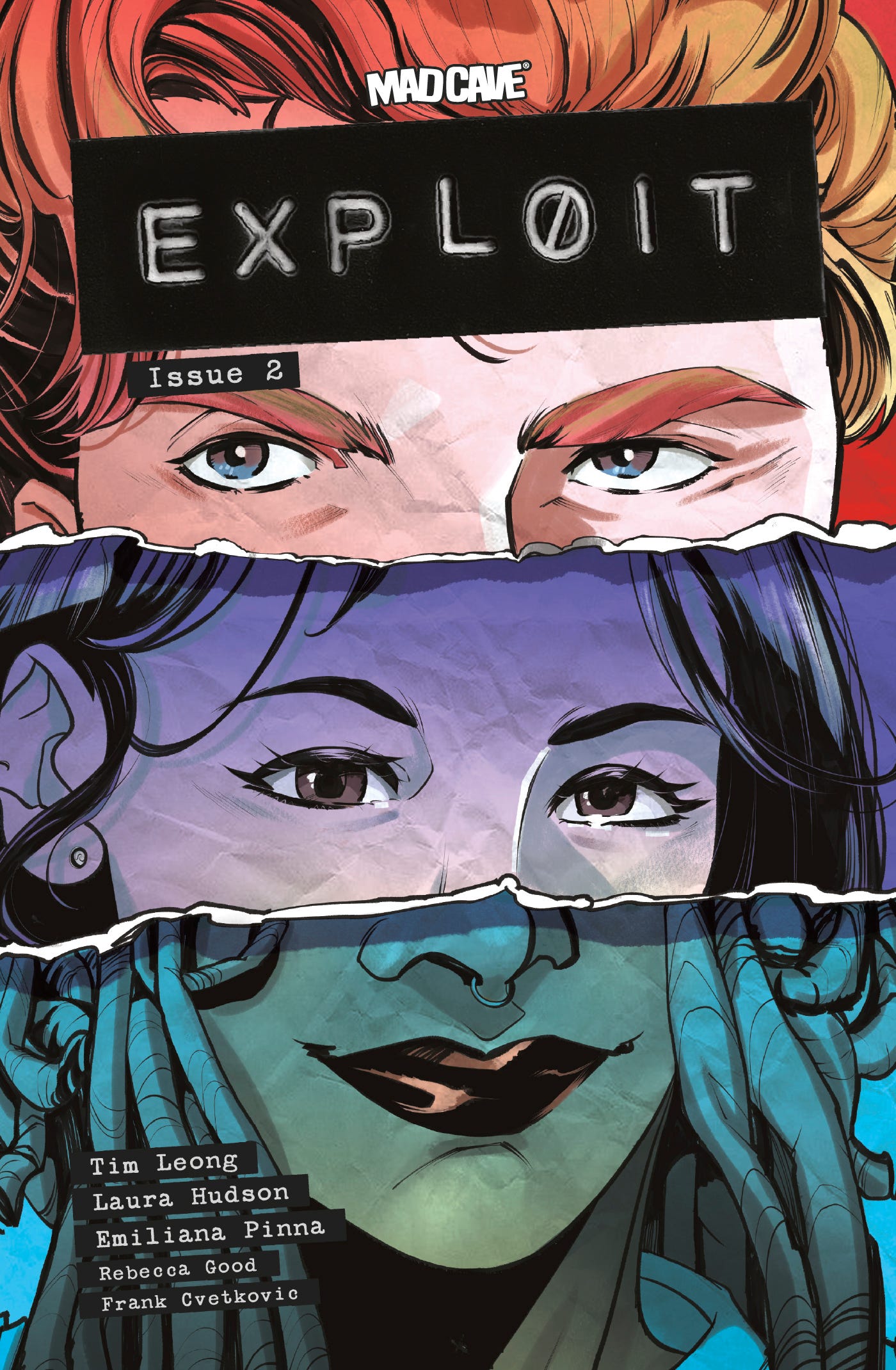
Exploit #2 from Mad Cave Studios takes the tension and paranoia introduced in the first issue and turns everything up several levels. What starts as a story about reporting and uncovering information quickly spirals into something much larger and far more dangerous, making this issue feel intense from beginning to end.
Kirby’s report acts as the spark that ignites everything, and the fallout is handled in a way that feels both believable and uncomfortably realistic. One of the strongest aspects of the issue is how it portrays reactions across social media. The flood of opinions, outrage, speculation, and misinformation feels exactly like how a major story would unfold online today. The comic captures the chaos of modern reporting incredibly well, showing how quickly narratives can spread and spiral beyond anyone’s control. It’s a clever touch that grounds the more dramatic elements of the story in something very familiar and recognisable.
As the issue progresses, though, it becomes clear that the story is operating on a much bigger scale than it first appeared. The stakes rise dramatically, and the escalation feels explosive both literally and figuratively. Every new revelation hints that there are larger forces at work behind the scenes, and the sense of conspiracy and danger deepens with each page. Kirby suddenly finds himself trapped in the middle of something far beyond a simple news story, and that growing pressure gives the issue a constant feeling of urgency.
The pacing is handled especially well throughout. Some scenes move at a frantic speed, throwing information, danger, and emotional reactions at the reader in rapid succession, while other moments deliberately slow things down to let the characters breathe, and the mystery develop further. Those quieter sections are important because they provide additional context, character insight, and subtle clues about what may really be happening. The balance between chaos and quieter storytelling helps the issue avoid feeling overwhelming despite how much is happening.
The characters themselves also continue to become more intriguing. While Kirby remains the central focus, there’s a strong sense that several supporting characters are hiding more than they reveal. Their motivations and connections still feel partially obscured, which adds another layer to the unfolding mystery. Rather than answering too many questions too early, the issue smartly deepens the uncertainty and keeps the reader guessing about who can actually be trusted.
Visually, the artwork does a great job of supporting the story's modern, fast-moving nature. The layouts involving social media posts, feeds, and online reactions are particularly effective, helping immerse the reader in the nonstop digital noise surrounding Kirby’s investigation. Instead of feeling distracting, those design choices become part of the storytelling itself, reinforcing the themes of media influence, public reaction, and information overload. Combined with the strong pacing and escalating tension, the visuals help make this issue feel energetic, contemporary, and increasingly unpredictable.
Get it at Forbidden Planet:
