

Review: Exploit #1
From Mad Cave Studios

A new series with a real-world feel is Exploit #1 from Mad Cave Studios.
Don’t bury the lede. Bury your enemies.
Kirby Kuo might be late to her true purpose in life--but no one would call the 30-something journalism intern out of time. When she uncovers a shocking secret about tech billionaire Cole Saxon, Kirby does what she has always wanted to do and publishes it. But the violence and vengeance that follows is like nothing she could have anticipated--pitting Kirby, her agoraphobic roommate, and the writing staff of the defunct magazine RIOT! to bring justice to a world where the rich get what they want without consequence.
Exploit is a timely, biting satire of the state of the American tech oligarchy with a pop-punk edge.
(W) Laura Hudson, Tim Leong
(A) Emiliana Pinna (C) Rebecca Good
(L) Frank Cvetkovic
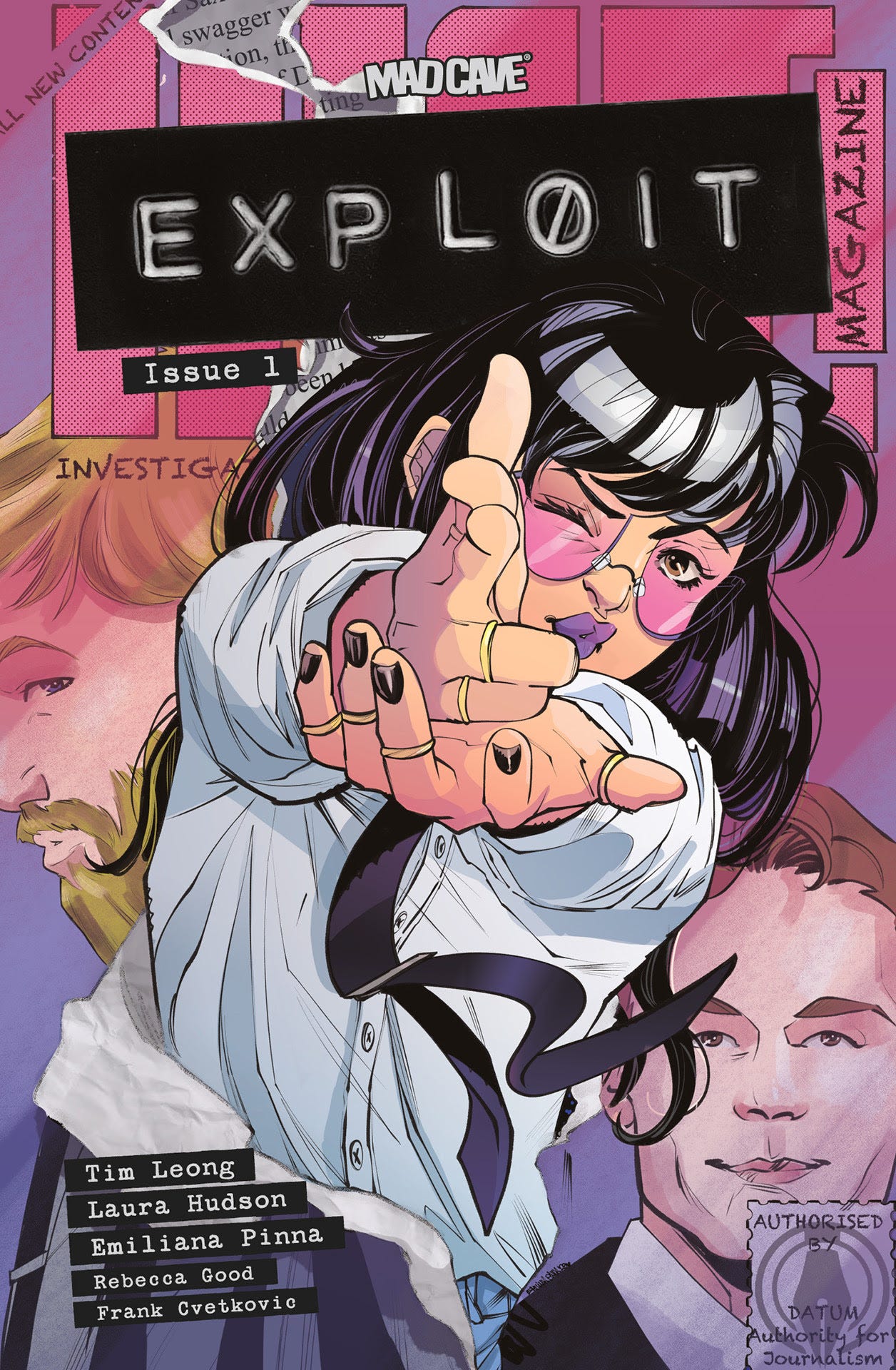
Exploit #1 from Mad Cave Studios was an incredibly interesting read, and one that immediately struck a chord with me. It doesn’t just dip a toe into politics — it fully immerses itself in the machinery behind it, particularly the immense influence journalists, media corporations, and their owners have over the information we consume. That dynamic — who controls the narrative, who decides what gets published, and who benefits from silence — has always been something I’ve felt strongly about. Seeing it explored here makes me even more intrigued about where this story might be heading.
The issue is firmly rooted in the journalistic side of things, and it quickly feels like Kirby’s career is being cut short before it’s even properly begun. The paper she works for has been bought out by a major tech company, and there’s a clear sense that traditional journalism is being edged out in favour of something more corporate, more controlled. It’s hard not to see the real-world parallels. The atmosphere feels uncomfortably familiar — newsrooms shrinking, editorial independence compromised, priorities shifting away from truth and towards profit and influence.
Just as things seem bleak, Kirby stumbles onto what could be the tip of a lifetime — the kind of story journalists dream about breaking. But, of course, nothing is ever simple. The information she uncovers is explosive, the kind that could cause serious fallout. Before anything can move forward, it has to be verified, backed up, and made watertight. And even then, there’s the looming question of who might want to stop it from ever seeing the light of day. The tension doesn’t just come from the story's content, but also from the systems in place that can suppress it.
What makes this issue work so well is how grounded it feels. The character moments are sharp and believable, especially in the quieter exchanges where motivations and doubts surface. There’s a genuine depth to the portrayal of newsroom dynamics — the ambition, the caution, the politics within the politics. The “big tech” angle isn’t just window dressing; it feels integral to both the characters and the wider narrative, reflecting what’s happening around us right now in a way that feels relevant rather than heavy-handed.
Visually, the art supports the tone perfectly. The panel transitions are handled with care, moving us smoothly between scenes while maintaining tension. Conversation-heavy sequences — which could easily feel static — are instead given energy through clever framing and subtle shifts in perspective. The scene near the end, where the ramifications of publishing are discussed, is particularly well executed. The angles and pacing heighten the sense that something significant is about to unfold, leaving us with a strong feeling of anticipation for the future.
Get it at Forbidden Planet:
