

Review: Nectar #3
From Vault Comics

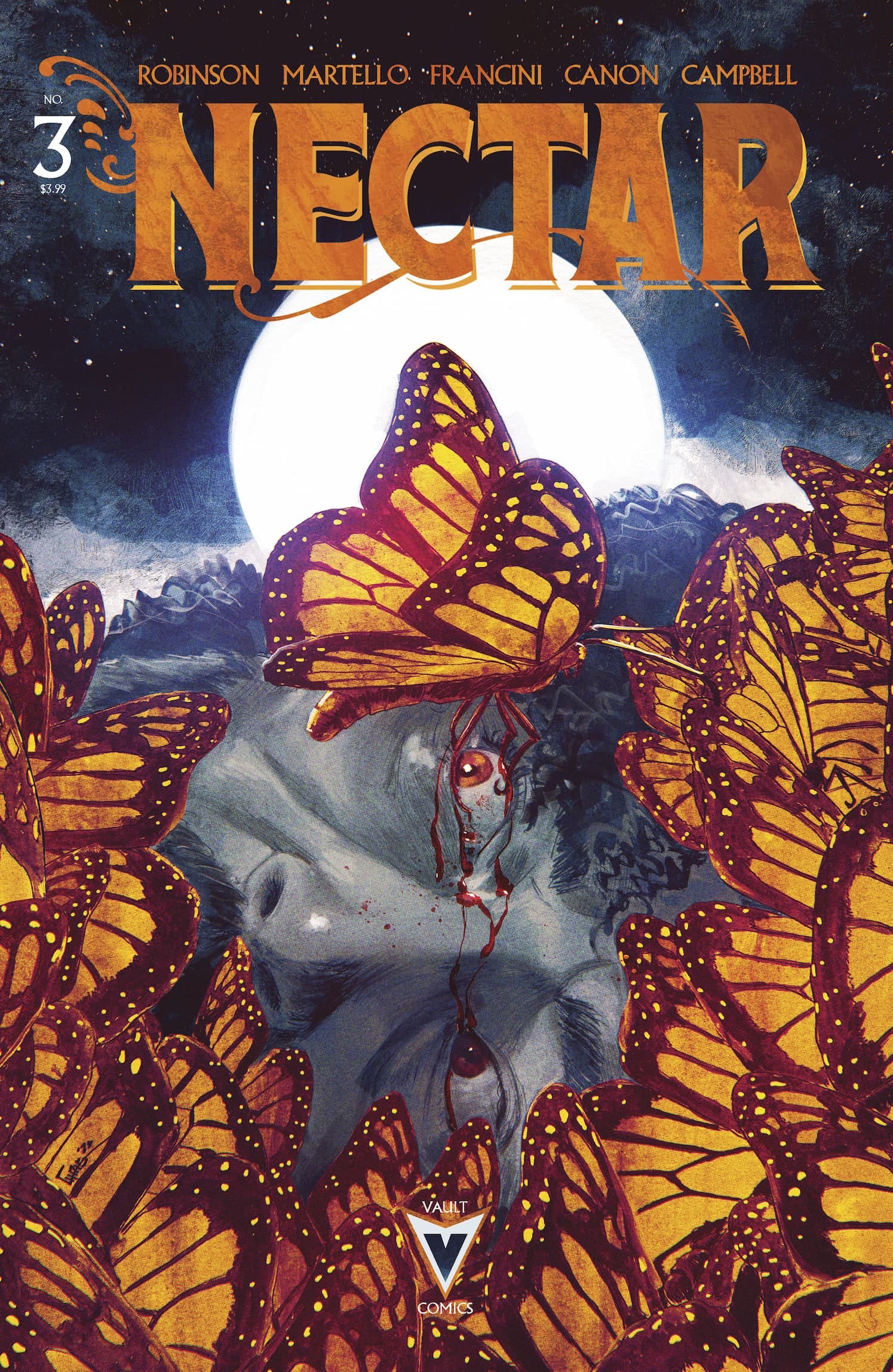
The silent horror from the butterflies continues in Vault Comics’ Nectar #3.
As the plague spreads across the island, Amos and Lillian grasp the magnitude of the threat, while Pastor Grant takes matters into his own hands—with a shotgun. What are these butterflies, and can their danger be contained before everyone on the island succumbs to their need for human blood?
New York Times bestselling author Jeremy Robinson and Italian phenom artists Annapaola Martello & Francesco Francini horrify readers with a quaint village’s descent into madness.
Writer: Jeremy Robinson
Artists: Annapaola Martello & Francesco Francini
Colorist: Steve Canon
Letterer: Jim Campbell
Cover Art: Chris Shehan
Nectar #3 is an incredibly intense and unsettling instalment that continues to build the growing sense of dread surrounding the outbreak on the island. The story leans heavily into themes of hysteria, fear, and blind devotion, creating an atmosphere that feels increasingly dangerous with every page. Between the terrifying dancing plague and the almost unnoticed spread of the butterfly infection, the issue does an excellent job of making the island feel completely trapped in chaos.
One of the most disturbing elements of the issue is the horrifying effect the infection is having on people. The dancing plague itself becomes more gruesome here, with victims literally dancing themselves to death in horrific fashion. The scenes of exhausted, broken bodies collapsing after being pushed beyond human limits are genuinely unsettling, and they add a layer of body horror that makes the infection feel even more terrifying. The butterflies drifting through the island, almost silent, only make things creepier, arriving without warning like deadly omens, spreading destruction while appearing strangely beautiful at the same time.
The ongoing conflict between science and religion remains at the centre of the story, and this issue really highlights how dangerous that divide has become. Pastor Grant continues to emerge as one of the most frustrating and compelling figures in the series. His fanaticism and increasingly unstable behaviour allow him to manipulate the frightened villagers, whipping them into a frenzy and steering them further away from reason. He thrives on fear and chaos, using religion to justify the escalating madness around him, even while he seems to be losing control himself. Watching the panic spread through the villages because of his influence is both fascinating and infuriating, and it makes me look forward even more to the moment when he is finally forced to face the consequences of his actions.
On the scientific side of the story, there are still many unanswered questions surrounding the infection and the butterflies, but the attempts to contain the outbreak at least feel grounded and believable. The decision to quarantine the island makes complete sense from a practical standpoint, even if it creates even more suffering for the people trapped there. That isolation adds another layer of hopelessness to the story because it becomes clear that those left behind are effectively on their own. The quarantine not only increases fear and desperation but also creates further violence, death, and instability as resources, trust, and order continue to break down.
What makes the issue work so well is how tightly paced and frantic everything feels. The story never really slows down, constantly moving between outbreaks of violence, religious hysteria, scientific investigation, and the eerie presence of the butterflies themselves. There is a constant feeling that things are spiralling further out of control, and the tension continues to build with every chapter. The butterflies in particular are used brilliantly throughout the issue, hovering in the background like silent assassins whose presence alone signals that something terrible is about to happen.
The artwork and colouring remain a major strength of the series as well. The visuals perfectly capture both the horror and chaos unfolding across the island, with several panels standing out for their disturbing imagery and emotional intensity. The contrast between the beauty of the butterflies and the gruesome deaths they leave behind is especially effective visually. The colouring adds so much atmosphere to the story, helping to create a bleak, oppressive tone that suits the material perfectly. Combined with the frantic pacing and unsettling subject matter, the art helps make this one of the strongest and most memorable issues of the series so far.
